
How To Start Skiing: A Beginner’s Guide
Skiing is a rare and special activity: a healthy outdoor winter sport that people of all ages can enjoy together, across generations. However, like all sports, it can feel unfamiliar and overwhelming at first. With the right guidance and well-fitted gear, you can manage the learning curve well.
Our team has been helping new skiers get started for more than forty years, and the first steps always start with clear instructions, the right equipment, and realistic expectations.
This guide breaks down what your first lesson will look like, the key movements to practice, and how to choose the gear that will help you make progress.
Getting Started: Your First Steps on the Snow
If you’re stepping onto skis for the first time, having an experienced skier or certified instructor by your side can make all the difference.
A trained professional knows how to teach the mechanics of balance, stance, and movement in a way that keeps early practice simple and safe.
If you’re learning to ski at a resort, you’re in luck. Ski resorts often have dedicated learning areas with instructors who introduce the basics on flat ground. You learn how to put on your skis, how to stand up correctly, and how to move in a controlled way before heading to a slope.
Find a Professional Instructor
Professional ski instructors are trained to teach the fundamentals of how to ski for beginners. If you are learning the basics of skiing at a resort, don’t hesitate to ask the staff to help you find an instructor.
They know how to break down complex movements into simple, manageable steps. They’ll start you off on flat ground, teaching you how to put on your skis, how to stand up, and how to get comfortable with the feeling of sliding.
A good lesson is the fastest and safest way to build a strong foundation. Most ski resorts offer group or private lessons designed specifically for first-timers.
Get a High-Quality Pair of Ski Boots
The right boots will make your skiing experience so much better. A ski bootfitter can help you choose the right option for you. It’s a good idea to practice walking in your ski boots indoors first since they limit how much you can flex your feet and ankles.
Once you’re outside, especially on snow, kicking your toes slightly can help you gain traction and make it easier to push off as you walk. It might seem simple, but many people end up slipping or falling just from walking around in snow, so getting comfortable with your boots makes a big difference.
Master the Basics: Pizza and French Fries
When you talk about pizza and French fries in terms of skiing, you’re not talking about food. This is one of the first bits of advice ski instructors will give to beginners.
There are two basic ski positions that you do with your feet:
Pizza
This is your braking and turning tool. By pointing the tips of your skis together to form a wedge or a slice of pizza, you create friction against the snow, which helps you control your speed and eventually stop.
French Fries (Parallel)
When your skis are parallel to each other, like two French fries, you will naturally pick up speed. You will transition between these two positions to manage how fast you go down the slope. Learning how to shift your weight to control your skis is a core skill you’ll practice extensively.
What Kind of Gear Does a Beginner Need?
Choosing the right skiing gear at the start helps you stay comfortable, warm, and supported on the hill. Ski boots, skis, bindings, a helmet, proper clothing, and goggles all contribute to control and safety.
Gear that does not fit correctly can make learning far more difficult. The right setup allows your movements to translate cleanly into the skis, which helps you progress at a steady pace.
Why Quality Ski Gear Helps You Learn Faster
Ski gear can be an investment, but it plays a direct role in balance and performance. The specialists at Boston Ski + Tennis understand how to select equipment that suits your size, ability, and goals. Proper bootfitting is especially important.
Boots transfer energy into the skis, and an accurate fit helps you stay efficient throughout your lesson. Skis and bindings are also adjusted to release appropriately if you fall, which adds peace of mind as you practice.
Your Essential Beginner Skiing Gear Checklist
Here’s a breakdown of the essential beginner skiing gear you’ll need:
- Skis and Bindings: As a beginner, you’ll want shorter, more flexible skis that are easier to turn and control. Consult experts like Boston Ski + Tennis to select the ideal pair and ensure bindings are set to release safely. We recommend leasing or renting gear when you are a beginner, because that way, you can grow into gear better suited after that first year.
- Ski Boots: This is arguably the most important piece of your equipment. Boots transfer energy from your body to your skis. They should be snug but not painful. A proper boot fitting from a trusted shop like Boston Ski + Tennis is essential for comfort and control.
- Poles: Initially, your instructor might have you start without poles to focus on balance. As you progress, poles will help with timing and rhythm in your turns.
- Helmet: A helmet is a non-negotiable piece of safety equipment. It protects you from head injuries and is standard practice for skiers of all levels.
- Goggles: Goggles protect your eyes from the sun, wind, and snow. They also improve your visibility, helping you see the bumps and contours of the slope.
- Appropriate Clothing: Dress in layers. You’ll need a waterproof outer layer (ski jacket and pants), a warm mid-layer (like a fleece), and a moisture-wicking base layer. Don’t forget waterproof gloves and warm ski socks. Ski gear is purpose-built to keep you warm, dry, and comfortable, from moisture-wicking socks to snow-blocking outerwear and durable gloves, so you can stay on the mountain longer and enjoy your time.
The Boston Ski + Tennis team can help you find everything you need for your beginner ski gear setup at one of our conveniently located shops.
How To Ski for Beginners: Your First Day on the Slopes
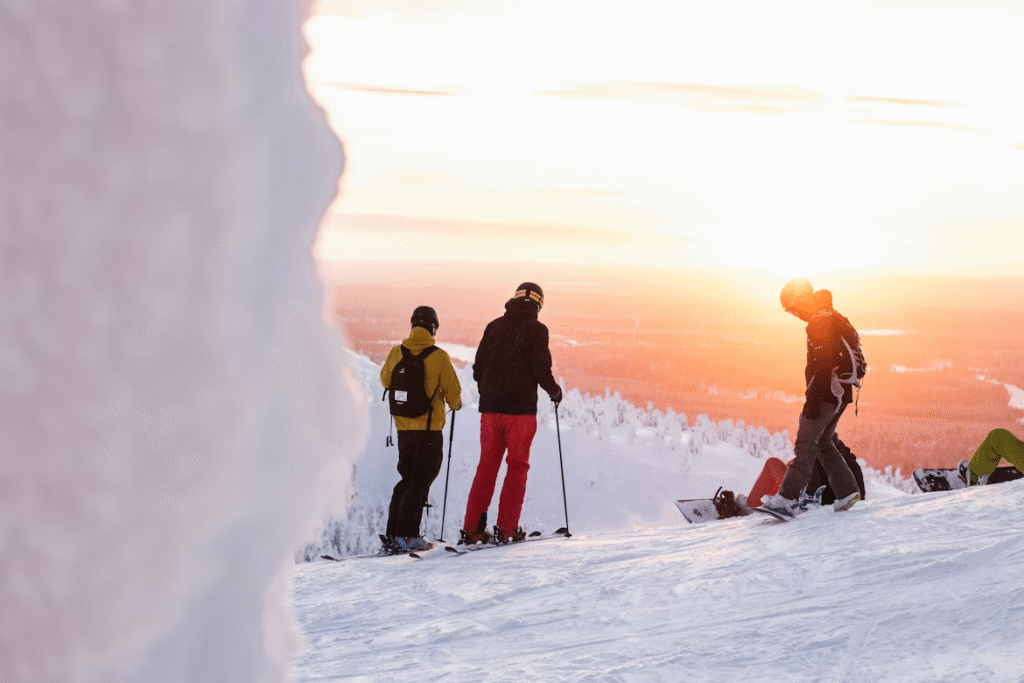
Now that you’ve got the ski gear, you’re ready for the slopes.
Make sure you’re patient with yourself and just have fun. Everyone learns how to ski at different paces. We recommend starting on a smaller hill, otherwise known as a “bunny hill”.
These are mainly created to be a designated learning area for learning how to ski for beginners. Bunny slopes have a very gentle grade and are often serviced by a “magic carpet” (a conveyor belt lift) that is much easier to use than a chairlift for your first time.
Building Control at a Manageable Pace
Your instructor will often guide you through wedge turns, controlled stops, and gradual increases in speed. Falling is normal when you begin. Learning to fall safely, preferably to the side or backward, helps protect your knees and hands. Over time, your balance improves, and the movements start to feel more natural.
How Do You Get Up After a Fall on Skis?
Falling is part of learning, and knowing how to stand back up makes the process far less tiring. Getting up correctly protects your knees, keeps your skis from sliding away, and helps you stay calm as you continue practicing. Most instructors take time during a first lesson to show beginners how to reset their stance after a fall.
Positioning Yourself to Stand
After you come to a stop, start by bringing your skis across the slope rather than pointing downhill. This prevents them from sliding. Keep your knees close together and place your hands on the uphill side of your body to brace yourself.
Next, you will need to put your downhill ski first (the one further down the slope). Then put pressure on the edge that contacts the snow, then dig in. That helps you stay in place a lot. Use your hands to push yourself into a seated position, then shift onto your knees so your skis rest on their edges.
Standing Safely and Steadily
Once you are balanced on your knees, place both hands on the tops of your skis or on the snow just in front of you. Press upward in a slow, steady motion. Your weight should move directly over your skis as you rise. This helps you regain balance without sudden motions. Taking your time keeps the movement controlled and reduces the chance of slipping again.
When Should You Buy Your Own Ski Gear Instead of Renting?
Renting is a practical way to begin skiing. It keeps costs manageable as you learn and gives you the chance to understand what type of equipment suits you.
Once you start skiing more than a few days each season, owning your gear may be the better option. Personal equipment offers consistency, which helps your skills develop more quickly since you are using the same boots and skis each time.
Combining Renting and Buying
Many new skiers purchase boots first and continue renting skis. Boots influence comfort and control, and having a pair fitted by the team at Boston Ski + Tennis can make each day on snow feel more predictable. Skis can be added later once you know your preferred style and terrain. Leased boots are usually made wider to fit most people, so if you have narrow feet or foot issues, the extra volume can affect comfort since boot fit involves length, width, and height.
In many cases, a custom footbed, or even your own properly fitted boot, can make a huge difference in your skiing experience, because the more comfortable your feet are, the more fun you’ll have on the mountain.
What Is the Hardest Part About Learning How to Start Skiing?
The hardest part of learning to ski is often that very first day when everything feels awkward, and your body is working in ways it’s not used to yet.
You’re learning how to stand, slide, stop, and even walk in skis, which can be surprisingly tiring and a little frustrating at first. Getting comfortable with the feeling of gliding on snow, keeping your balance, and trusting the skis takes a lot of mental and physical energy.
Once you push through those “baby steps” on day one, things usually click much faster the next time you’re on the mountain. Thanks to the foundation you built that first day, your second session often feels noticeably easier and way more fun.
Can You Learn to Ski Without Taking Lessons?
Some skiers try to learn on their own, but early instruction usually leads to faster progress and safer habits. Lessons teach you how to turn, stop, load lifts, and move confidently on varied terrain. Even a single beginner lesson lays down a foundation that makes the rest of the learning process far smoother.
How Do You Know When You Are Ready for the Next Level of Skiing?
As your confidence grows, it becomes natural to wonder when to move beyond the bunny slope. Progress happens differently for each skier, but there are a few clear signs that you are ready for terrain with a slightly steeper pitch. Instructors often watch for these milestones because they show that your fundamentals are becoming consistent.
Feeling Comfortable Controlling Speed and Direction
If you can link turns at a steady pace, control your speed without hesitation, and come to a smooth stop on command, you are likely ready to get on an easy green trail. These skills show that your skis are responding to your movements and that you can navigate gentle changes in slope without feeling overwhelmed. Comfort with riding the lift is another solid sign.
Maintaining Balance Through Varied Snow Conditions
Beginner terrain sometimes has patches of firm snow, soft piles, or mild uneven spots. When you can manage these changes without losing balance, it means your stance has become more stable. This steadiness helps you handle slightly steeper terrain where the pitch can shift more noticeably from one section to the next.
Finding the Right Support for Your Ski Journey
Learning to ski doesn’t happen overnight; it’s a step-by-step process.
After your first lesson, you’ll have the basics you need to start practicing on easy terrain, and from there it’s all about getting in those runs and building confidence. With each day on the mountain, you’ll feel more comfortable, your turns will start to flow more smoothly, and controlling your speed will feel less intimidating.
Before long, you’ll move from the bunny hill to green trails and begin to check out more of the mountain. Every run builds on the last, and soon you’ll find yourself skiing with a smile, excited for whatever comes next. Getting started is the hardest part, but once you take that first step, a whole new world of adventure opens up.
Visit Boston Ski + Tennis if you’re ready to get into skiing and see what kind of ski gear fits you. Our team is more than well-versed in helping beginners with ski maintenance, high-quality ski equipment, and much more, so you’ll feel right at home.